Global AI DevOps is redefining the way teams collaborate, innovate, and deliver technology in 2025. As artificial intelligence becomes deeply embedded in workflows, global development and operations teams are breaking down barriers and working seamlessly across borders.
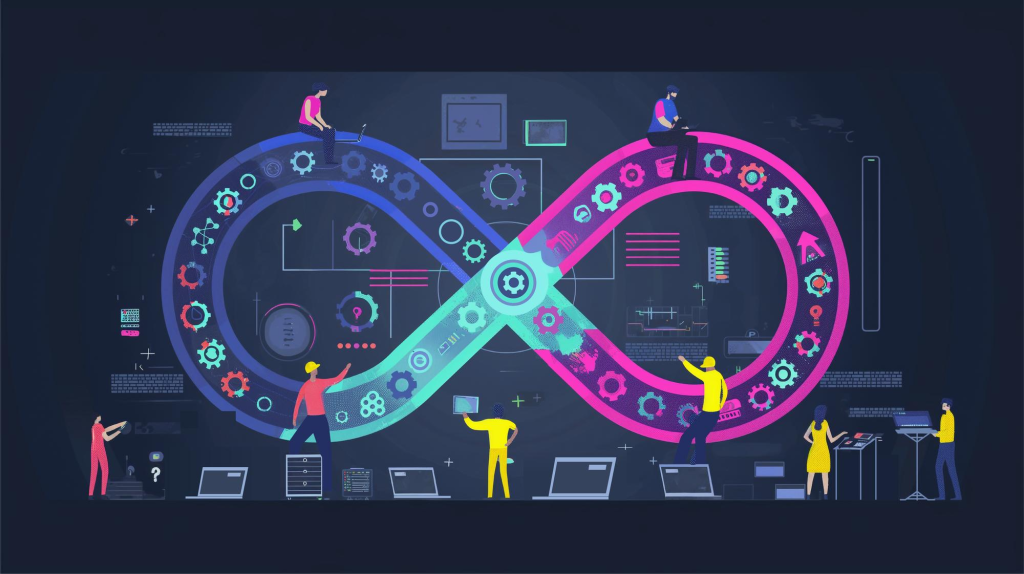
Why AI plus DevOps dissolves borders
DevOps flattens org walls. AI compresses time and cuts cognitive load. Together, they tighten the build, measure, learn loop so teams truly follow the sun.
- Standardize on international DevOps frameworks and AI integration to reduce regional drift, while leaving room for local autonomy where it matters.
- Put AI copilots and code assistants into daily workflows so repetitive toil drops, and contributors get gentle nudges on policy, style, and security hygiene.
- Lean into cloud-native platforms so environments are reproducible, and teams in APAC, EMEA, and the Americas roll out from the same trusted blueprints.
The dashboards tell the story. Teams adopting AI-powered DevOps tools for multinational companies see deployment frequency rise and lead time for changes shrink. Change failure rate and MTTR often improve or at least hold steady. DORA metrics make outcomes visible across services, teams, and regions, turning debates into decisions.
1) Shared cloud-native platforms
- Kubernetes, Terraform, and Helm, paired with GitOps tools like Argo CD and Flux, give every region an infrastructure as code backbone that behaves predictably.
- Pipelines in GitHub Actions, GitLab CI, CircleCI, Azure DevOps, and Google Cloud Build drive repeatable builds and reliable rollouts.
- Service catalogs and API gateways standardize contracts so global AI development teams in the DevOps era can compose, release, and reuse quickly.
Buying tip: Treat your internal platform like a product. Publish a roadmap, gather feedback often, and track adoption like a customer-facing feature. If it feels clunky, smart people will route around it.
2) AI in the developer workflow
- Copilots such as GitHub Copilot, GitLab Duo, and Amazon CodeWhisperer speed up code and tests while nudging contributions toward your policies and style guides.
- AI-assisted code review catches regressions, secret leaks, and anti-patterns early in the PR lifecycle.
- Natural language to config helps platform teams ship IaC modules, policy as code rules, and runbooks with far less friction.
Field tip: During proofs of concept, don’t only watch code volume. Track defect escape rate and PR cycle time. Speed without quality always sends a bill, usually in the middle of the night.
3) AIOps and observability across time zones
- Observability stacks like OpenTelemetry, Prometheus, Grafana, Datadog, and New Relic unify telemetry so teams speak the same language.
- AIOps layers such as Dynatrace Davis and Splunk ITSI surface anomalies and correlate incidents to likely root causes. Remote DevOps teams working with AI across time zones hand off with AI-generated timelines that explain what happened and why.
- PagerDuty and Opsgenie enable follow-the-sun operations with smart rotations and tight playbooks.
Pro move: Standardize golden signals and SLOs per service. You’ll avoid dashboard debates and keep everyone reading the same gauges.
4) Security and compliance by design
- DevSecOps bakes SAST, DAST, SBOMs, and supply chain attestation into CI and delivery.
- Policy engines like Open Policy Agent, Kyverno, and HashiCorp Sentinel enforce global guardrails with room for regional overrides when laws differ.
- This foundation underpins international DevOps frameworks and AI integration that handle data residency, industry standards, and customer trust.
Three allies you want close: GitOps to prevent drift, DORA metrics to track outcomes, and DevSecOps so you move fast while staying safe.

5) Collaboration rituals that scale
- Asynchronous-first habits, RFCs, and decision logs make cross-cultural collaboration in AI engineering inclusive and resilient.
- Shared documentation and architectural decision records prevent knowledge loss during handoffs.
- Lightweight ceremonies with a clear directly responsible individual keep momentum without burning people out.
Anecdote: I’ve seen entire quarters rescued simply by writing decisions down with owners and dates. Your future self will buy you a coffee for that habit.
A practical playbook for cross-border AI and DevOps cooperation
Detailed specifications and comparison
Make collaboration operational, not aspirational.
Standardize the toolchain – Source control, branching strategy, and code review norms – CI templates and deployment strategies for continuous delivery – Secret management and policy as code
Make work observable – Define golden signals and SLOs per service – Centralize logs, metrics, traces, and error budgets
Build AI into every stage – Code generation and test scaffolding – AI review gates in CI for security and performance – AIOps for anomaly detection and root cause hints
Design for time zones – Follow-the-sun with scheduled handoffs and AI-generated context – Async updates via PR descriptions, changelogs, and daily summaries
Invest in culture – Cross-cultural onboarding, mentorship, and inclusive meeting norms – Shared values around blameless postmortems and continuous learning
Tip to scale: Write once, run everywhere. Parameterize environments and policies so regions can adopt without forking. Forks multiply pain.
Traditional distributed vs AI-augmented global DevOps
Traditional distributed teams survive on manual handoffs, tribal knowledge, and uneven tooling. AI-augmented global DevOps runs on shared platforms, paved roads, and automation that travels well across time zones. The payoff is fewer surprises, faster feedback, and calmer on-call weeks.
Tooling stack map for AI DevOps global teams
| Category | Tools |
|---|---|
| Source and collaboration | GitHub, GitLab, Bitbucket, Jira, Slack, Microsoft Teams |
| CI and release | GitHub Actions, GitLab CI/CD, CircleCI, Azure DevOps, Google Cloud Build |
| Runtime | Kubernetes on EKS, AKS, GKE, serverless on AWS Lambda and Cloud Functions, service mesh with Istio or Linkerd |
| IaC and policy | Terraform, Pulumi, Helm, Argo CD, Flux, Open Policy Agent, Kyverno |
| Observability | OpenTelemetry, Prometheus, Grafana, Datadog, New Relic |
| AIOps and incident response | Dynatrace, Splunk ITSI, PagerDuty, Opsgenie |
| AI engineering | GitHub Copilot, GitLab Duo, Amazon CodeWhisperer, Hugging Face Inference, Vertex AI, Azure OpenAI |
| Security | Trivy, Snyk, OWASP ZAP, Sigstore, SBOM generation with Syft |
These AI-powered DevOps tools for multinational companies normalize good habits while leaving space for regional nuance.
How multinational teams leverage AI and DevOps to accelerate innovation
Shift left everywhere – Use AI to generate tests, mutate them for edge cases, and simulate traffic early.
Adopt feature flags for safe experimentation across markets.
Product localization loop – AI-driven market insights steer backlog priorities by region.
Observability slices reveal performance by locale, device type, and network tier.
Data-aware architectures – Federated learning and data minimization respect residency laws.
Model registries version and gate models per region to meet compliance.
Continuous learning – Track DORA metrics per service and per region.
Run blameless postmortems with AI timelines and focused action items.
That is how global collaboration in AI and DevOps teams fuels innovation across borders in 2025. The idea-to-impact loop stays short even when teammates never share a room.
How multinational teams leverage AI and DevOps to accelerate innovation in regulated industries
Financial services and healthcare can’t swap safety for speed. Encode regional controls with policy as code, route data to regional planes, and ship with progressive delivery. Tie rollout policies to risk scores, not only accuracy. For high-stakes workflows, maintain model cards and keep human-in-the-loop approvals where judgment is essential.
The winning pattern is simple. Automate everything that must be consistent, and make it visible. Keep human review where nuance matters most. You stay compliant without slamming the brakes.
Roles and skills for the new era
- Platform engineers design golden paths and reusable templates.
- MLOps engineers own model lifecycle, drift detection, and deployment.
- SREs curate SLOs, error budgets, and reliability automation.
- Product-minded developers own outcomes across code, tests, and telemetry.
To thrive, build a T-shaped skill stack. Cloud, CI/CD, IaC, and observability form the base. Layer on applied AI skills like prompt design, model evaluation, and responsible AI.
Want structured learning and hands-on projects aligned to hiring outcomes and DORA metrics? Explore Impacteers courses and mentorship.
How to evaluate tools for cross-border AI and DevOps cooperation
Think like a buyer, not just a builder.
- Compliance fit: Map to ISO 27001, SOC 2, PCI, HIPAA, and local rules. Check for native data residency and easy evidence export.
- Policy depth: OPA or similar for fine-grained controls. Look for multi-tenant policy sets with regional overrides.
- Observability maturity: First-class OpenTelemetry support, SLIs and SLOs built in, and low cardinality overhead.
- AI clarity: Transparent model updates, strong red teaming, prompt privacy protections, and admin guardrails.
- Total cost: Include compute, egress, on-call, and training seats in the TCO. Model token costs for AI assistants.
Run a 30-day bake-off with a representative service. Measure PR cycle time, escaped defects, MTTR, and developer satisfaction before you sign anything. Trust data, not demos.
Governance, risk, and compliance across borders
Cross-border AI and DevOps cooperation must align with legal and ethical norms.
Data residency and sovereignty
Deploy regional data planes. Use privacy-preserving techniques like differential privacy when needed.
Continuous compliance – Map controls to ISO 27001, SOC 2, PCI, HIPAA, and local standards.
Automate evidence collection from pipelines, IaC, and runtime to reduce audit fatigue.
Responsible AI – Establish model cards, bias detection, and human review for critical use cases.
Tie rollout policies to risk scores, not just accuracy metrics.
Helpful resources: the DORA research program, the CNCF landscape, the Google SRE Workbook, and NIST’s AI Risk Management Framework.
FAQ
Q1: How are AI and DevOps enabling global collaboration in the tech industry?
By creating shared context at scale. Cloud-native platforms and GitOps give every region the same playbook. AI speeds delivery safely by suggesting code, writing tests, and highlighting risks before merge.
Q2: What AI-powered DevOps tools help remote teams work across time zones?
For development, GitHub Copilot, GitLab Duo, and Amazon CodeWhisperer assist with code and tests. For operations, Dynatrace and Splunk ITSI surface anomalies and propose likely root causes.
Q3: How do international DevOps frameworks and AI integration improve compliance?
Policy as code pulls controls into CI and production. Tools such as Open Policy Agent, Kyverno, and Sentinel enforce guardrails the same way everywhere.
Q4: What metrics prove cross-border collaboration works?
Start with the four DORA metrics. Track deployment frequency, lead time for changes, change failure rate, and MTTR per service and per region.








Post Comment