Discover how skills-based hiring is transforming modern talent strategies by prioritizing competencies over credentials. Learn how forward-thinking companies build stronger, more adaptable teams through skill-focused recruitment.

The best talent leaders today are adopting a mind-set that recognizes that skills are, quite bluntly, the new money. As more and more things are automated and as AI begins to value-add and extend human capabilities in so many ways, a laser-like focus on people as learners, as people who adapt and problem-solve in collaboration with technology, becomes absolutely necessary. It is within these realms that the two megatrends converge.
Comprehending Skills-Based Hiring within Today’s Workplace
Skills-based hiring evaluates job seekers for what they believe they can truly do, as opposed to what they might qualify for. Instead of testing résumés based on degrees and years of experience, employees use skills-based tools and simulations to evaluate who presents the greatest talent.
It becomes even more pressing when job skills are evolving at a rate that outstrips the capabilities of traditional learning infrastructure. Today, skills that are very much in demand, and some of which were not even conceived a decade ago, including rapid engineering, AI collaboration, cloud automation, and digital product management, have not been taught as subjects in an academic degree.
It also implies that when we shift focus from someone with skills to someone with competencies, we unlock larger talent pools and rid ourselves of historical obstacles that have shortchanged millions of qualified professionals who could either be self-taught, bootcamp-ready, or career transitioners.
A skills set will better define job readiness compared with traditional degrees that emphasize theoretical knowledge. Employers will soon be clamoring for skills like:
Critical thinking and problem-solving skills
Digital literacy and working with AI
Conclusion
Communication and cross-functional collaboration
Communication and
Technical Specialization: Examples include Data Analysis and Cloud Architecture.
Adaptability and lifelong learning
These skills and capabilities are leading to actual business outcomes. And again and again, evidence shows that workers brought on board based on skills, and not on background, have performed better and stuck around.
Conversely, degree-based hiring translates to a situation where skills and job vacancies are not linked. It contributes greatly to labor gaps because it fails to engage people who, though have skills required within an organization, lack degree qualifications.
Understanding Skills-Based Hiring in Today’s Workforce
Skills-Based Hiring has become a defining talent strategy in today’s workforce as organizations shift away from traditional degree-driven recruitment models. Instead of relying solely on academic credentials or job titles, employers now prioritize the real-world competencies that directly influence performance, adaptability, and long-term success. This modern approach allows companies to identify candidates who can demonstrate problem-solving, digital fluency, communication, and the ability to learn new technologies quickly — all essential skills in a rapidly evolving work environment. As AI and automation continue to reshape job roles, Skills-Based Hiring helps organizations build more agile and future-ready teams by focusing on what candidates can do rather than where they studied. This shift not only expands access to diverse talent but also improves hiring accuracy, productivity, and overall workforce effectiveness, making it a crucial strategy for competitive growth in 2025 and beyond.
Key Insight: Competencies vs. Credentials
One of the biggest shifts present in the hiring market for 2025 is the deliberate removal of credentialism. The biggest giants within an industry have removed the degree requirement from thousands of job postings-IBM, Google, Walmart, and Accenture.
Prioritizing skills will help in the following ways:
Global Hiring: Unlocking the door to Non-Traditional Applicants
Increased accuracy and relevance of job matches: Skills-based testing exposes actual skills
Faster Hiring: It cuts down on resume-screening time
Aligned performance: Workers who are hired for talent are more likely to perform.
As sectors progress and develop, skills are much more adaptable and have better futures compared to academic qualifications.
The Emergence of AI-Human Combined Resources
Artificial intelligence is impacting all sectors and ushering in a new paradigm of working as humans and intelligent systems are increasingly set to work together. The need arises for a new approach to planning and developing talent.
The cleverest talent plays today are no longer about viewing AI as a substitute for humans but as a hope to integrate AI automation and human creativity.
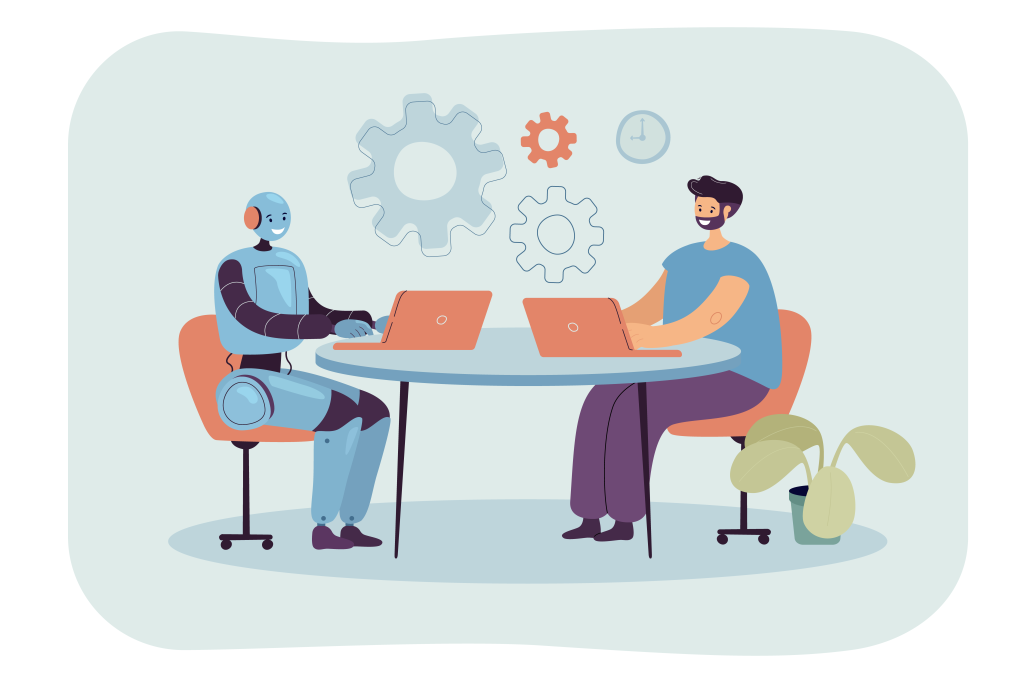
It is here that the fundamental principle of “now-next” workforce planning becomes so valuable.
Key Insight: “Now-Next” Talent Strategies for AI-Human Collaboration
“Now-Next” Talent Planning and its role in helping an organization succeed amidst rapid technological changes by developing ‘Next’ talent plans based on ‘Now’ talent needs.
AI Model Governance and Monitoring
Workflow Automation Design
Human-Centered Collaboration with AI
Continuous learning paths
As organizations have prepared for and are geared towards these two different timelines, they have become flexible and adaptable so as to be equipped for the workplace today and the workplace of tomorrow.
Skill- Based Hiring: Its Advantages to the Organisation
- A more diverse, broader talent base
The removal of degree barriers enables businesses to screen millions of qualified job seekers who possess the necessary skills and expertise, regardless of their academic background.
- Lower Turnover and Better Job-Fit
When selecting candidates done based on abilities, individuals have a chance to discover their respective niches and thus remain there for a relatively longer period.
- Improved Alignment with Business Goals
Skills-based frameworks allow teams to have a clear sighting wherein the team can be well-aligned with organizational priorities and performance metrics.
- Higher Efficiency within a Fast-Moving Market
Skills-based approaches make it easier to undertake up-skilling, re-skilling, and talent redeployment.
The Role of AI in Skills-Based Hiring
Human
The factors that are driving the trend toward skills-based recruitment are artificial intelligence and, to some extent, virtual reality. these days, HR departments rely on artificial intelligence for candidate aptitude and requirement analysis for the position.
AI tools enable:
Competency mapping
Skill evaluations
It is a task involving persona matching.
Predictive job performance analytics
Why Skills-Based Hiring Is Replacing Degree-Based Recruitment in 2025
Skills-Based Hiring is replacing traditional degree-based recruitment in 2025 because employers now recognize that real-world competencies matter far more than formal credentials. As the digital economy evolves and AI becomes embedded in everyday workflows, companies need talent that can adapt quickly, solve complex problems, and work effectively with emerging technologies. Degrees often fail to measure these critical capabilities, while skills assessments, practical evaluations, and portfolio-based reviews provide a much clearer picture of a candidate’s true potential.
Capability planning and analysis
These tools enable businesses to recruit more effectively and fairly.
Creating Talent Strategies for the Future
Unfortunately, it does happen that before applying skills-based hiring at an organization, it needs to put some extra efforts internally.
1.Rather, it would appear
A skills taxonomy specifies all competencies required within an organization. These competencies include:
Core competencies
Technical skills
Behavioral trails
Those skills that have been made redundant by AI, or less meaningful due
- Develop Dynamic Career Paths
Workers want more visibility about opportunities for growth-from their current role to next, and next, and next.
- Continuously Upskill and Reskill
The major focus of these training sessions would be on learning ways to work together as employees with the aid of AI tools and not merely learning to work with modern digital workflows.
It seems that there are some operational challenges and it
Problem: Managers who are against new ways of recruitment.
Focus on skills for review tasking, interpretation and understanding review outcomes, and utilization of AI-assisted review tools.
Problem: Risk of bias within tools and assessment procedures
Solution: Use qualified frameworks and rubrics systematically and with transparency.
Lack of standard skills definition for various roles.
Solution: Create a scalable skills taxonomy and engage cross-functional leaders.
Practical Applications
Since
Tech Industry
Employers look at coding and portfolio projects, not degrees.
Healthcare
Simulations demonstrate readiness better than résumés.
Finance
Competencies identify employees who are qualified for leadership roles.
Measuring Success: Competency Based Hiring
Since
Key metrics are:
Accuracy for skill/role match
Elimination of recruitment bias
Reducing Time-to
Performance Results
Internal mobility
Employee Engagement and Retention
These are some of the factors that will help an organization know if it is successful with its skills-first approach.
FAQ
- What exactly is skills-based hiring?
It is a recruitment method that focuses more on the skills an individual possesses and less on any number of educational degrees or titles that may be attached to that person. It involves hiring people for who they are and not for certificates they hold.
- Why skills-based hiring matters in 2025.
It is because the nature of work changes at an exponential rate compared with an attainable degree. A skills-based hiring strategy will make sure businesses employ flexible people with skills and abilities necessary to work with AI tools and adapt to the ever-changing digital needs at their own doorstep.
- How does AI enable skill-based recruitment?
Competency analysis, role-based short-listing, prediction, and removal of bias in hiring are some uses. Analysis on workforce planning can be done with the aid of AI.
4. What are “now-next” talent strategies?
These methods will allow businesses to focus on today’s needs-what needs to be accomplished “now”-and position for next opportunities driven by AI capabilities: “next.” Resulting agility will be for the long term.
5. Does skills-based hiring diversify?
Yes, they do; they remove degree requirements, and thus avenues are created for self-taught, experienced, as well as non-traditional individuals.






Post Comment