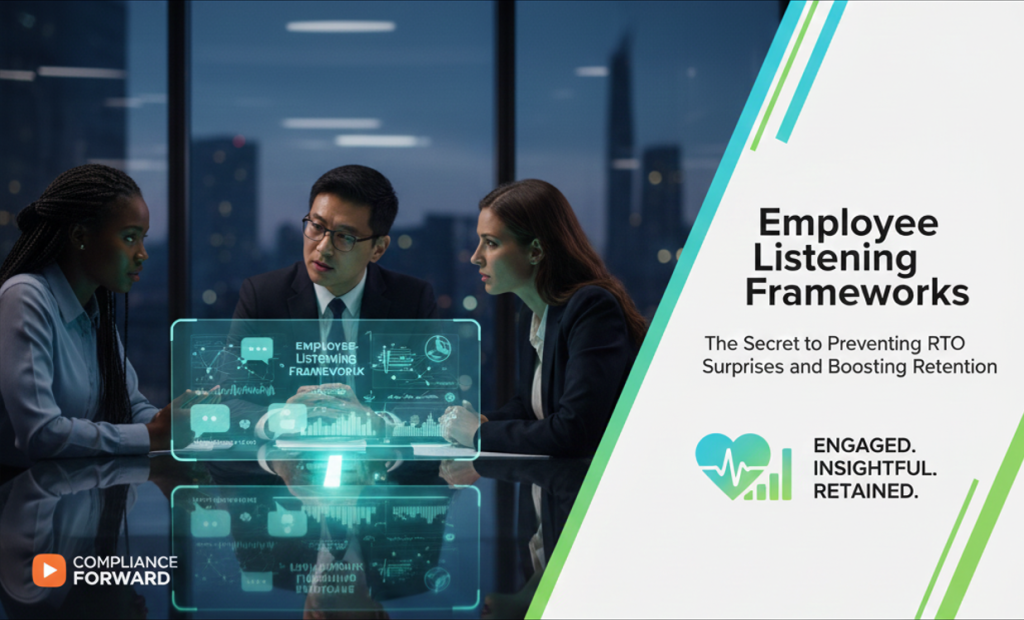
In 2024–25, return-to-office (RTO) mandates blindsided thousands of employees. Productivity dropped, social media backlash rose, and voluntary turnover climbed. Why? Because organisations made location decisions without employee listening frameworks—structured systems for feedback, sentiment analysis, and expectation mapping.
Today, HR leaders, CHROs, and organisational psychologists agree on one principle:
Retention is a listening problem.
If you don’t hear employees early, you lose them later.
Across enterprise teams, HR consulting circles, and North American talent think-tanks (including many Ottawa-based workforce experts), one message is clear: employee listening is now a retention strategy—not an HR formality.
What Are Employee Listening Frameworks?
Employee listening frameworks are structured methods to gather, interpret, and act on workforce feedback across multiple channels—not just surveys. They combine:
- real-time sentiment tracking
- pulse surveys
- manager feedback loops
- stay interviews
- exit-trend analysis
- predictive analytics
The goal is to turn employee signals into strategic actions—before disengagement becomes attrition.
Primary search-intent keywords:
- employee listening framework
- employee feedback loops
- RTO employee sentiment
- employee retention strategy
- HR listening programs
Why Listening Matters Most During RTO Decisions
Return-to-office isn’t a facilities problem—it’s a trust problem.
Companies that issued sudden mandates without input saw:
- resignation spikes
- drops in engagement
- internal protest
- lower productivity
Employee listening programs help leaders understand:
- which teams actually need onsite collaboration
- which roles benefit from hybrid models
- what incentives increase willingness to return
- what workplace experience employees expect
Listening does not mean surrendering decision-making—it means making evidence-based decisions HR can defend.
Fine-Tuning Workforce Plans Through Continuous Listening
The biggest error companies made last year was static workforce planning.
They treated talent sentiment as constant instead of dynamic.
Effective listening frameworks support:
- quarterly workforce sentiment reviews
- manager-level feedback escalations
- compensation pressure tracking
- burnout indicators
- evolving employee preference trends
This allows CHROs to fine-tune workforce strategy—not lock into outdated plans.
Listening as a Retention Goldmine
Retention isn’t driven by yoga days or cappuccino machines. It is driven by clarity, autonomy, career mobility, manager trust, and psychological safety.
Employee listening frameworks give HR visibility into:
- whether employees see growth
- how managers impact morale
- what skills gaps are blocking advancement
- when performance concerns are driven by workload
- which policies cause dissatisfaction
Companies using structured listening frameworks see:
- higher manager approval
- lower regrettable attrition
- lower hiring costs
- faster productivity recovery
That’s why many CHRO think-tanks call listening a retention goldmine.
Why Exit Surveys Don’t Count as Listening
Exit interviews are a post-mortem.
By the time employees speak, they are already gone.
Employee listening frameworks shift data collection to earlier stages:
- onboarding listening
- 90-day pulse
- stay interviews
- career velocity feedback
- quarterly sentiment
This transforms listening into predictive retention.
The Ottawa Connection: Expert-Led Listening Models
Canadian HR institutes—particularly research groups in Ottawa—have been pushing structured listening models for years, emphasising:
- behavioural economics in employee sentiment
- organisational psychology applied to feedback
- governance for safe-expression channels
Their message resonates globally:
Without psychological safety, feedback is dishonest.
Without honesty, HR makes blind decisions.
How Employee Listening Frameworks Work
1. Multi-Channel Feedback Collection
Not one survey—five channels.
2. Analytics Layer
Identify correlations between feedback and performance.
3. Closing the Loop
Tell employees what changed because they spoke.
4. Manager Enablement
Managers become listening interfaces—not blockers.
5. Governance
Protect anonymity, handle sensitive information safely.
Listening without action destroys trust.
Listening + action = culture advantage.
Preventing RTO Surprises With Workforce Data
Before mandating office returns, leaders should examine:
- willingness by demographic
- commute radius
- childcare pressure
- productivity trends
- team-based collaboration needs
This allows data-backed RTO models such as:
- 2-day anchor hybrid
- role-based onsite selection
- project-specific colocation
No backlash. No shockwaves. No viral posts.
Key High-Intent Keyword Targets for This Article
Ideal for HR, B2B, CHRO searches:
- employee listening framework
- employee feedback analytics
- RTO sentiment strategy
- employee retention strategy
- workforce planning feedback
- HR predictive retention
Conclusion: Listening Is HR’s Most Valuable Infrastructure
In a high-attrition, hybrid-work economy, listening frameworks are:
- cheaper than hiring replacements
- faster than cultural transformation
- more accurate than manager opinions
Organisations that listen prevent churn.
Organisations that don’t invite it.
Retention starts long before resignation.
It starts the moment an employee feels heard.







Post Comment