Death of Hybrid Work is becoming one of the defining shifts of 2025 as top talent increasingly rejects outdated, rigid workplace models in favor of radical autonomy and transparent, algorithm-driven decision frameworks.
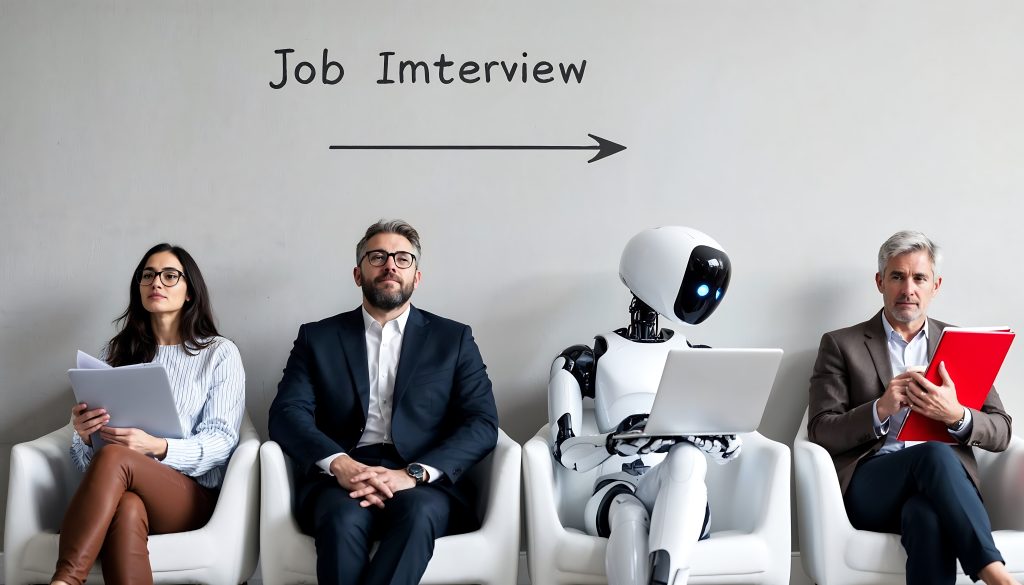
I recently watched a Fortune 500 CHRO try to recruit a Tier-1 Data Architect. The offer was text-book perfect. Top 1% salary. Equity that could buy a small island. And the crown jewel: “We offer a flexible, hybrid 3-2 schedule.”
The candidate didn’t just decline. They laughed.
They didn’t laugh because the money was wrong. They laughed because the premise was antiquated. Offering “hybrid work” to a high-performer in 2025 is like offering a telegraph machine to a teenager. It’s not a perk; it’s an artifact. We are witnessing the rapid evaporation of the “Flexibility Era.” It had a good run. But the sandbox has changed.
We have entered the Post-Flexibility Era.
In this new epoch, the binary debate of “home vs. office” is a distraction for mediocre management. The elite talent pool—the ones who actually move the needle on your EBITDA—has moved on to two far more aggressive demands: Radical Autonomy and Algorithmic Transparency.
If you don’t know what these are, you aren’t just losing the war for talent. You’re fighting with muskets against drones.
The Fallacy of “Permission”
Let’s strip the varnish off the word “flexibility.”
At its core, flexibility is a permission structure. It is an employer benevolently granting a localized freedom within a rigid cage. *”You may work from home on Fridays, provided you are on Slack by 9:00 AM.”* This is not freedom. This is digital servitude with better coffee.
The top 5% of the workforce has realized that their output is non-linear. They know that four hours of their deep work outperforms forty hours of a mid-level manager’s shallow attendance. Consequently, they view “permission to work from home” as insulting.
Enter Radical Autonomy.
Radical Autonomy is the shift from *location-independence* to *time-and-method sovereignty*. It is the total decoupling of input (hours) from output (value). A developer with Radical Autonomy doesn’t ask if they can pick up their kids at 3 PM. They simply execute. They own the “How” and the “When” entirely; you only own the “What.”
The Asynchronous Manifesto
Consider the mental model of “The localized CEO.” Treat every single employee as the CEO of their specific function. Does a Board of Directors tell a CEO what time to log into Jira? No. They look at the P&L.
Companies failing to adopt this are bleeding talent to DAOs, solo-preneurship, and competitors who treat adults like adults. The 9-to-5 construct is a relic of the industrial assembly line, where presence equaled productivity. That correlation is now zero. Actually, it might be negative.

If you are still tracking mouse movements or green dots on Teams, you are signaling a lack of trust so profound that no amount of free kombucha can fix it.
The Black Box Problem: Algorithmic Transparency
Here is the second, darker shift.
We are deploying AI into HR stacks at a breakneck pace. Resume screening. Performance sentiment analysis. Retention risk flagging. We are building a digital panopticon. And the talent knows it.
High-value employees are becoming paranoid. Rightfully so.
They ask: *”Why was I passed over for that internal promotion?”*
Old answer: *”Management discretion.”*
New reality: *”The algorithm flagged your sentiment analysis as ‘disengaged’ during Q3.”*
This is the Black Box Problem. Top talent refuses to play a game where the rules are hidden inside a neural network they cannot audit. They demand Algorithmic Transparency.
If an AI is going to judge their resume, they want to know the keywords. If an algorithm is going to determine their bonus based on code commit velocity, they want to see the source code of that decision engine. They want the “Glass Box.”
The “Explainability” Clause
I predict that by the end of 2025, we will see executive contracts that include “Algorithmic Explainability” clauses. Talent will demand to know the metadata profile the company holds on them.
It’s a power shift. We used to hoard information to maintain control. Now, information asymmetry creates toxicity. If your high-po talent suspects a “retention algorithm” is the only reason you offered them a raise, the capital in the relationship burns to ash. They don’t want to be managed by a ghost in the machine.
The New Social Contract
So, where does this leave the C-Suite?
You are staring at a bifurcation. You can double down on “culture”—which usually means mandated happy hours and forcing people back to the office to “collaborate.” Or, you can reconstruct the social contract.
Implementing Radical Autonomy requires a terrifying leap of faith. It demands you dismantle the surveillance state. It requires Results-Only Work Environments (ROWE) on steroids. It means if a VP of Marketing hits their quarterly targets in 15 hours a week, you don’t ask what they did with the other 25. You say “Thank you.”
Implementing Algorithmic Transparency requires humility. It means admitting that your AI tools are biased. It means showing your math.
Monday Morning Protocol: Tactical Shifts
Enough philosophy. How do you operationalize this next week?
1. Kill the “Core Hours”: If you have a policy stating “Everyone must be available between 10 AM and 2 PM,” burn it. Replace it with “SLA-based availability.” If the work gets done and the client is happy, the schedule is irrelevant.
2. The “Why” Audit: Look at your HR tech stack. Identify every point where an automated system makes a decision about a human. Can you explain that decision in plain English? If not, turn it off until you can.
3. Outcome Over Optics: In your next executive meeting, forbid any metric related to “attendance,” “badges swiped,” or “hours logged.” Force the conversation exclusively to output metrics.
The Hard Truth
The era of the “Company Man” is dead and buried. The era of the “Digital Mercenary” is here, and they are armed with options.
They don’t want your perks. They don’t want your ping pong tables. They don’t even really want your “flexibility.” They want the dignity of being judged solely on their merits, transparently, and the autonomy to execute their craft without a manager breathing down their digital neck.
Give them the keys to the car. Or watch them drive away in someone else’s.







Post Comment