Artificial intelligence has been in development for years, but the HR world is seeing one of the biggest shifts it’s ever faced. What began with simple automation-such as scanning résumés or chatbots assisting candidates-has grown well beyond what was ever imagined: truly capable and autonomous agentic AI. These intelligent systems don’t just execute tasks but make decisions, take initiative, and work alongside the HR teams as digital partners in many capacities.

This evolution comes amidst pressure on organizations to speed up, analyze better, and scale up for a better employee experience. According to Gartner, those companies that successfully deploy autonomous AI agents increase their overall productivity as high as 29%-a number not going unnoticed by the world’s top executives and HR leaders. In the face of talent shortages, increasing workloads, and burnout, the timing couldn’t be better.
In the following blog, we will discuss how AI integration has changed HR, agentic AI emergence, real-world use cases, benefits, and challenges of using the same, and the future of intelligent HR systems.
Understanding AI Integration in HR Today
These HR functions are generating a huge amount of data, but traditionally, due to the lack of appropriate tools or time, analysis of this data cannot be effectively done. Integrating AI will definitely change that. Today’s AI systems are not limited to keyword matching or sending automated confirmations. Their increasing capabilities now include:
Conversation Context Understanding
Anticipating the trends before they get out of proportion
Tracking employee sentiment
Support decision-making with evidence
Personalization of experience for every employee
That means integrating intelligence across the touchpoints involving HR, starting from recruitment to onboarding, learning, performance, and retention of employees.
Instead of having HR professionals invest hours in manually pulling reports or assessing patterns, AI provides continuous insights in real time. This makes HR shift from being a reactive department to a strategic and proactive partner.
What Is Agentic AIand Why Does it Matter in HR?
While traditional AI simply waits for a command to finally execute a task, in agentic AI, the operation is with a degree of autonomy. You can think of it like an AI system with initiative: it can analyze situations, make decisions about what needs to be taken care of, and then act on it without constant human oversight.
It’s a game-changer, particularly in HR.
Agentic AI can handle whole workflows that used to take hours or days. It can connect several systems, monitor conditions, and trigger processes on its own. It does not eliminate the human decision-makers but eliminates the layers of repetitive administration that weigh down HR teams.
Here’s how it’s starting to pop up in people operations:
- Autonomous Recruitment Agents
Recruiting is one of the most resource-heavy areas within HR. Candidate screening, applicant communication, interview planning, feedback collection, and record-keeping of all hiring can overwhelm even experienced teams.
Agentic AI flips that dynamic completely.
Recruitment agents can:
Search databases of the candidate pool for qualified candidates
Analyze job descriptions and make intelligent candidate matches.
Send personalized outreach messages
Schedule interviews at a time which suits everyone.
Rank candidates on skill and fit
Tracking and updating of the progress, as well as assurance of updating in hiring systems.
This will save time, enhance consistency, and lessen the chances of human biases filtering through.
That frees recruiters to focus on what matters: building relationships, assessing fit, and helping hiring managers.
- Analytics and Predictive Insights to HR Decision-Making
Most HR people will understand how much effort it takes to find trends before they become issues. You might have a gut feeling that something is going on with engagement, or you notice the beginning of turnover; but to actually confirm those feelings with data is quite another story.
Agentic AI makes this easier.
It is able to detect patterns across:
Performance information
Workload levels
Employee feedback
It points out the communication patterns.
Learning activity
Attendance or scheduling issues
It could warn HR that a team is in burnout mode-as evidenced by its declining completion rate and rising after-hours activity. It might even recommend remedial actions, including workload reassignments or manager coaching.
It gives human resources the insight necessary to intervene early on, before morale, productivity, or retention is affected.
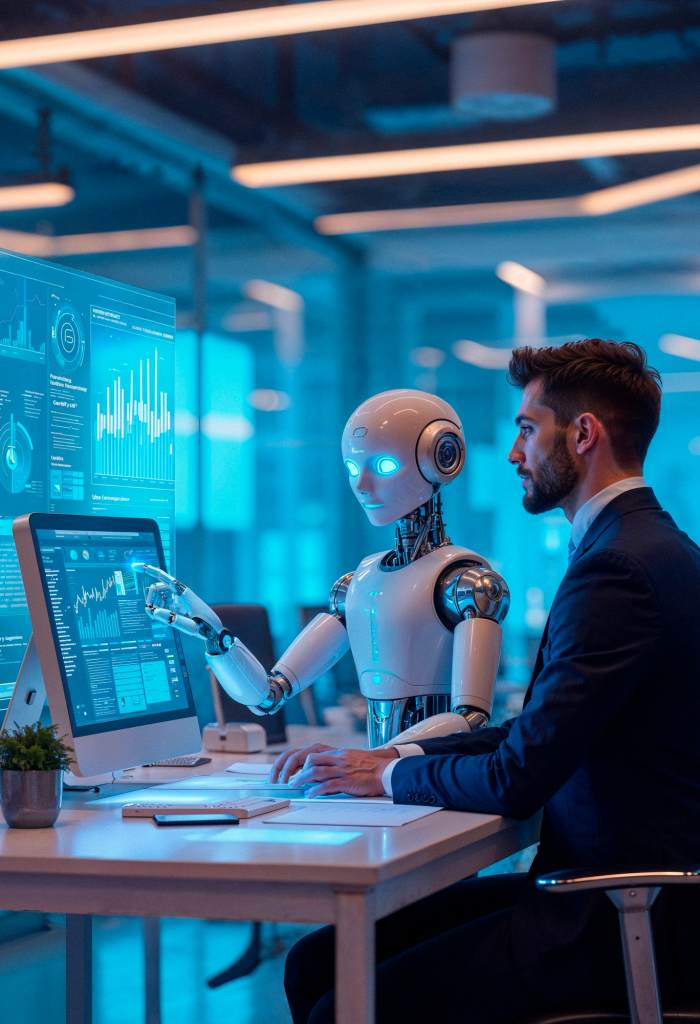
- Automation of Employee Life Cycles
The employee experience consists of dozens of micro-interactions from the time someone applies to when that person leaves. However, having to manage each step manually entails enormous effort.
The capabilities of Agentic AI include the automation and orchestration of workflows for the following services:
Preparation of offer letters and contracts
Creating onboarding checklists
Assignment of trainings
The setup of IT access and equipment
Monitoring compliance needs
Reminder or nudging employees
The system automatically refreshes the HRIS records.
This is the consistency that is priceless. Every employee gets the same amount of attention, and the HR teams are freed up to have more meaningful, strategic conversations.
- Customized Employee Support
Workers today expect consumer-grade experiences in their workplaces. AI will help make this happen, which will finally let HR deliver consumer-grade experiences. Intelligent virtual assistants for HR can handle the following:
Policy issues
Benefit enquiries
Time-off requests
Payroll – status updates
Learning recommendations
The employees get their answers directly; sensitive matters that are necessitated by applications involving human empathy and judgment come from the HR team.
Why HR Leaders Are Adopting AI and Autonomous Agents Now
There can be several reasons as to why organizations are rapidly turning toward AI-driven HR transformation:
Operational Efficiency
Automation of routine activities allows HR to work at much larger scale and at speed.
Smarter decision-making
AI allows HRs to make data-driven decisions rather than simple guesses.
Improved employee experience
The payoff will be in the form of personalized recommendations, faster responses, and proactive support, since it will all combine to create a seamless experience.
Stronger compliance, more accuracy
AI agents are rule-consistent, therefore making fewer errors and creating fewer regulatory risks.
It is fair and less biased.
AI-powered assessments minimize unconscious bias when designed and monitored properly.
Of course, the prediction by Gartner that autonomous AI could push productivity up 29% adds a very hard-hitting business case for its adoption.
Will Agentic AI Replace Human Resource Jobs?
That’s a fair concern, and a common one. Reality is more complicated.
Agentic AI displaces tasks, not people.
These roles are incredibly human-centric. One just can’t automate empathy, conflict resolution, coaching, strategy, and cultural leadership. What AI can do is take away a lot of the manual work that often distracts HR from these responsibilities that add greater value.
Most HR teams adopting AI report:
Less burnout
More time for strategic projects
Better employee relationships
More accuracy in reporting
Smarter insights into the health of an organization
It does not take away jobs, but rather, AI bolsters the role of HR to help people perform well.
Challenges in Integrating Agentic AI
While all these many advantages can be exciting, active responsible adoption demands overcoming a number of key hurdles:
Data privacy concerns
Security is indispensable in the working of AI systems since it involves sensitive information.
Explanatory and transparency
The workers should, for example, be aware of the criterion used by the AI system in arriving at a decision, particularly when hiring or evaluating the performance of a person.
Monitoring bias
AI can reduce bias-but only if properly monitored and designed.
Change management
Teams need to be trained so that they can learn to cooperate with the AI tool.
Integration complexity
That does involve some planning and coordination to actually connect these bots with HRIS, ATS, CRM, and so on.
Because meeting these challenges ensures AI enhances, rather than disrupts, the HR experience.
The Future of AI and Agentic Systems in HR
In the future, integration of intelligent systems into HR is likely to go even deeper. Further integration of intelligent systems into human resource management may support a number of possibilities, including:
Self-optimizing talent pipelines
AI-powered, continuously monitoring talent needs and automatically adjusting hiring strategies.
AI-driven performance calibration
Systems analyzing performance data to recommend ratings fairly for all teams.
AI Emotional Intelligence
Tools for mood and stress level detection by means of communication analysis and feedback from employees.
Orchestration of fully autonomous onboarding
AI that sets up everything ready for an employee, without HR’s interference.
Smart Workforce Planning
Independent agents to make predictions concerning hiring needs up to a few months, in line with the trends of company growth.
The future of HR is not only digital but intelligent, proactive, and deeply embedded into every people process.
How HR Teams Can Get Started with Agentic AI
The successful journey of AI doesn’t have to be a huge revolution. You can start small:
Identify one repetitive HR workflow that can be automated, like scheduling interviews.
Introduce an analytics tool for real-time insights. Pilot recruitment agents for volume positions. Power onboarding with AI-driven processes for new hires. Train HR personnel on how to manage and work with AI systems. These little wins create momentum and prove the value of AI before scaling to larger efforts. Conclusion The integration of AI, along with the advent of Agentic AI, is imposing new meanings on HR’s role within the modern workplace. Not a thing of the future, autonomous AI is already producing measurable results, such as the 29% productivity boost forecasted by Gartner, it continues to reshape how HR teams function. Outsourcing the more mundane tasks to intelligent agents frees the HR professional to devote energy to strategy, connection, and culture-those aspects where human brilliance really comes into its own. The organizations that can adopt these technologies early will have an edge in talent attraction, workflow optimization, and generally in giving their employees meaning. The future of HR is not only automated but agentic, proactive, and deeply human-centered.






Post Comment