For HR leaders, onboarding managers, and B2B compliance teams, the pressure to verify identity, validate background checks, and manage workplace access has never been higher. Hybrid work, contractor-based engagements, and increasing data-security requirements have created a new reality: manual vetting is slow, risky, and expensive.
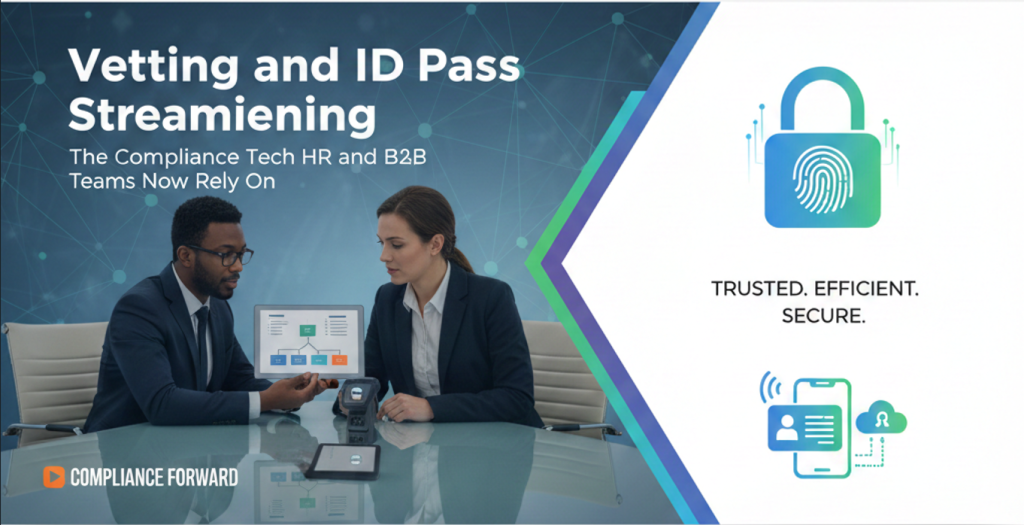
This shift is driving companies toward vetting software, digital ID pass management, and compliance automation platforms built to secure trust before anyone ever steps into a workplace—physical or virtual.
Why Vetting Matters More in a Hybrid Work Era
In a traditional office, physical visibility made verification easier. But today, businesses onboard:
- remote employees
- gig contractors
- third-party partners
- vendors accessing internal systems
Without reliable vetting and identity validation, HR teams risk:
- regulatory non-compliance
- data breaches
- fraudulent hires
- workplace security incidents
That is why identity verification and digital vetting platforms have become essential trust-enablers—not optional HR add-ons.
The New Compliance Pressure on HR and B2B Companies
Across industries like IT services, manufacturing, logistics, healthcare, and facility management, buyers increasingly demand credential-verified and security-cleared personnel.
Corporate procurement teams now evaluate vendors based on:
- How fast they can vet employees
- Whether they maintain audit logs
- Whether their credential checks are standardised
- How securely IDs and access passes are issued
For B2B service companies, fast compliance capabilities = faster deal closures.
Manual Vetting Creates Delays HR Can’t Afford
Traditional vetting involves:
- collecting government IDs
- calling references
- emailing documents
- manual spreadsheet tracking
- issuing paper or plastic access passes
This wastes time and opens major risks. A misplaced document or unverified contractor could cost millions. Worse, HR teams lose productivity—research shows hiring delays directly affect retention and performance.
That is why automation platforms like IDGateway (example category) are emerging as central tools for HR and security teams—helping them verify identity, run checks, store documents securely, and trigger access approvals automatically.
How Technology Streamlines Vetting and Identity Passes
Modern vetting and ID pass software can:
1. Digitise document capture
Government IDs, certificates, police checks, and compliance records are uploaded securely instead of emailed.
2. Automate right-to-work and background validation
No more chasing references—systems integrate checks in minutes.
3. Generate digital workplace passes
Employees or contractors receive time-bound QR-based access—no plastic badges required.
4. Support hybrid access control
Whether someone works remotely, onsite, or across multiple facilities, access levels adjust dynamically.
5. Create audit trails for compliance
HR and compliance officers can prove due diligence instantly during audits.
6. Reduce onboarding time
A process that took days now takes hours.
For compliance-heavy sectors, this is no longer a convenience—it is operational survival.
A Trust-Enabler for Workforce Security
Remote work has made businesses more vulnerable to impersonation, unauthorised access, and identity theft. By requiring digital verification before granting system access, companies reduce risk and meet cybersecurity mandates.
Identity gateway platforms prevent:
- ex-employee logins
- unauthorised vendor access
- falsified identities
- system breaches due to weak credentialing
In essence, verified identity becomes the first cybersecurity layer.
HR Teams Benefit from Automation—Not Replacement
The goal is not to remove HR decision-making; it is to empower people leaders with reliable data. Automated vetting gives HR professionals:
- confidence in every hire
- reduced administrative stress
- faster onboarding workflows
- better compliance reporting
This frees teams to focus on experience, culture, and engagement.
For B2B Companies, Compliance Speed Becomes a Competitive Edge
Clients no longer wait weeks for clearance. They want service providers who can deploy compliant personnel instantly.
Fast vetting and digital ID passes help B2B companies:
- shorten onboarding SLAs
- win bigger contracts
- reduce onboarding liability
- meet buyer security demands
In procurement-driven markets, the vendor who verifies fastest often wins.
Key High-Intent Search Queries This Content Addresses
- vetting software for HR
- digital ID pass management
- workforce compliance automation
- identity verification for B2B
- hybrid workplace access control
- contractor onboarding compliance
These are the terms HR and compliance buyers actively search when evaluating platforms.
The Future: Seamless Identity + Zero-Friction Access
Workplaces will increasingly shift to smart identity ecosystems where:
- employee records sync automatically
- passes expire instantly upon offboarding
- vendor/contractor movement is trackable
- audits require one-click reporting
In this world, trust becomes programmable.
Conclusion
Hybrid work demands more than paperwork—it demands automated, secure identity control. Vetting platforms and digital ID pass systems help HR teams enforce compliance, protect workplaces, accelerate onboarding, and build commercial trust.
For B2B organisations, this capability is now a revenue driver. The companies that invest early will operate faster, safer, and far more competitively.







Post Comment